
In today’s fast-paced world, personal loans have become one of the most convenient financial solutions for managing expenses such as medical emergencies, weddings, home renovations, education, travel, or debt consolidation. However, with numerous lenders and loan options available in the market, choosing the right personal loan can be overwhelming.
Selecting the right loan is crucial because it directly impacts your monthly budget and overall financial health. Here’s a complete guide to help you make an informed decision.
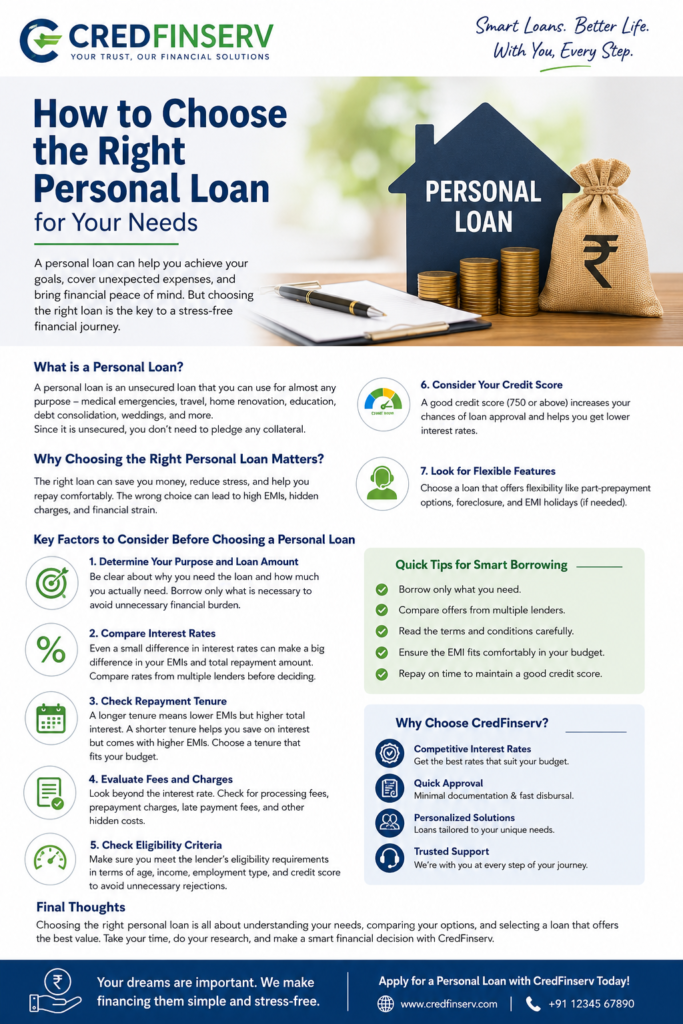
1. Identify Your Purpose and Loan Requirement
Before applying for a personal loan, determine why you need the loan and how much amount is actually required. Borrow only what is necessary to avoid unnecessary debt and higher EMIs.
Ask yourself:
- What is the purpose of the loan?
- How much money do I need?
- Can I repay the amount comfortably?
2. Compare Interest Rates
Interest rates play a significant role in determining the total cost of your loan. Even a slight difference in interest rates can significantly affect your monthly EMI and total repayment amount.
Always compare interest rates offered by multiple banks and financial institutions before making a decision.
3. Check the Loan Tenure
Loan tenure refers to the repayment period of your loan. A longer tenure results in lower EMIs but increases the overall interest paid. On the other hand, a shorter tenure reduces the total interest cost but increases the EMI amount.
Choose a tenure that balances affordability and repayment convenience.
4. Review Processing Fees and Hidden Charges
Many borrowers focus only on interest rates and ignore additional charges. Before applying, carefully check for:
- Processing fees
- Prepayment charges
- Foreclosure charges
- Late payment penalties
- GST and other applicable charges
Understanding all costs beforehand helps avoid unpleasant surprises later.
5. Evaluate Your Eligibility
Every lender has specific eligibility criteria based on factors such as:
- Age
- Monthly income
- Employment status
- Work experience
- Credit score
Ensure that you meet the lender’s requirements to improve your chances of quick approval.
6. Check Your Credit Score
Your credit score is one of the most important factors considered by lenders. A score of 750 or above generally improves your chances of approval and helps you secure lower interest rates.
Maintaining a healthy credit score by paying EMIs and credit card bills on time is essential.
7. Look for Flexible Loan Features
Choose a lender that offers borrower-friendly features such as:
- Part-prepayment options
- Foreclosure facility
- Top-up loans
- Flexible repayment options
These features can provide financial flexibility during unforeseen situations.
8. Read the Terms and Conditions Carefully
Never sign a loan agreement without reading the terms and conditions. Make sure you understand the repayment schedule, interest calculation method, penalties, and all applicable charges.
If you have any doubts, seek clarification before proceeding.
Conclusion
Choosing the right personal loan is not just about getting quick funds—it’s about selecting a loan that suits your financial needs and repayment capacity. Compare lenders, understand the costs involved, and evaluate your repayment ability before making a decision.
At CredFinserv, we help customers find the most suitable loan solutions with competitive interest rates, minimal documentation, and hassle-free processing, ensuring a smooth borrowing experience.